What is kilim?
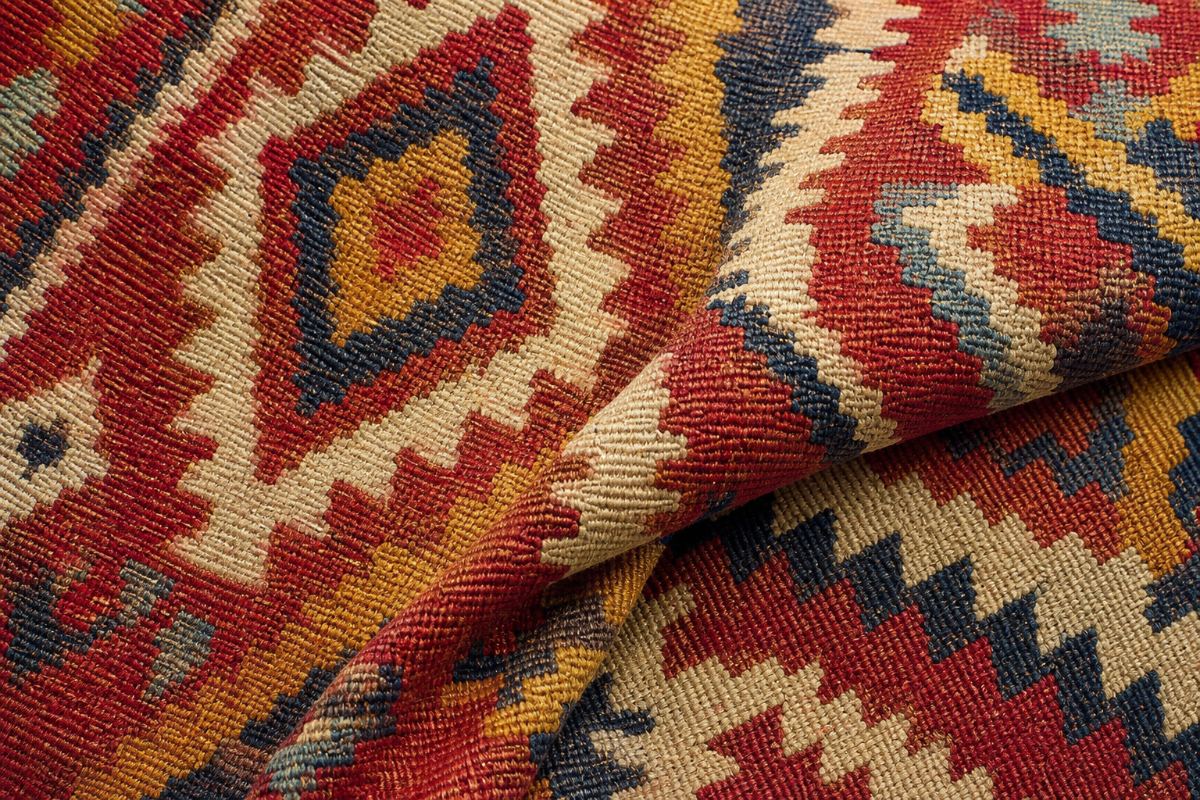
Kilim (كليم) is a flatwoven textile: weft locked on a loom, no pile standing up like a carpet. You can fold it; light and thickness feel different from a knotted or tufted rug.
In Morocco it belongs to Amazigh (Berber) weaving — geometric diamonds, stepped borders, chevrons — later used on cushions and wall hangings as well as floor pieces.
If it looks thick and stands up like wool pile, it is not a kilim structure, even if the pattern is “Berber-inspired”.
Cushion cover means the shell
A Moroccan kilim cushion cover is an unfilled shell (zipper or envelope back). You add a local insert — 45×45 or 50×50 cm is common in the trade. Confirm millimetres against your insert; “cushion” in a title often still means cover-only.
Listings that ship a stuffed pillow are a different product: bulk, returns, and usually not what “cushion cover” searchers want.
Motifs, seams, and the back
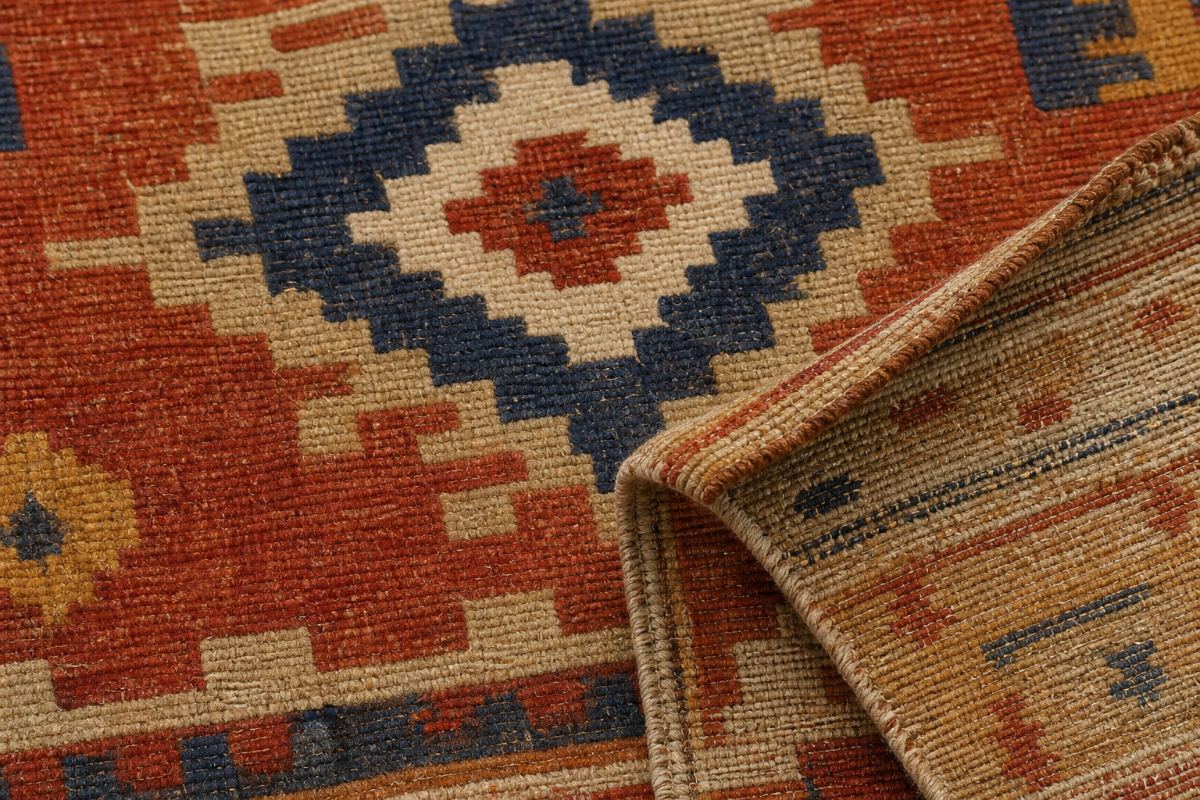
Middle Atlas palettes often run red, ivory, saffron, indigo, black. Pattern alignment at seams matters more than a perfect studio photo.
Ask whether the back is the same weave or a thin lining. Glued seams and printed “kilim look” fabric are the usual substitutes. Bright modern dyes are not automatically a red flag; hidden construction is.
Care
Edges and zipper stress points fail first. Spot-clean when possible; aggressive washing can distort geometry on handwoven pieces. Warm thuya wood tones sit well beside kilim geometry if larger furniture stays neutral — that is décor, not a quality test.
Buying checklist
Cover-only language; flatweave (not pile); size for your insert; closure type; fibre (wool or cotton blend); a close-up of the weave edge and the back. When in doubt, the edge of the cloth tells you more than the front motif.
Common questions
Does “Moroccan kilim cushion” include the pillow fill?
Usually no. Sellers mean a cushion cover — the woven shell only. You supply the insert or buy it separately. Read the listing for “cover only”.
Is kilim the same as a pile rug?
No. Kilim is flatweave — no pile height. It is thinner, lighter, and the pattern is woven into the structure, not knotted on top.
Are bright synthetic colours always a red flag?
Not always — many covers use modern dyes. The red flag is hidden material: thin backing, glued seams, or “kilim look” printed fabric sold as handwoven.