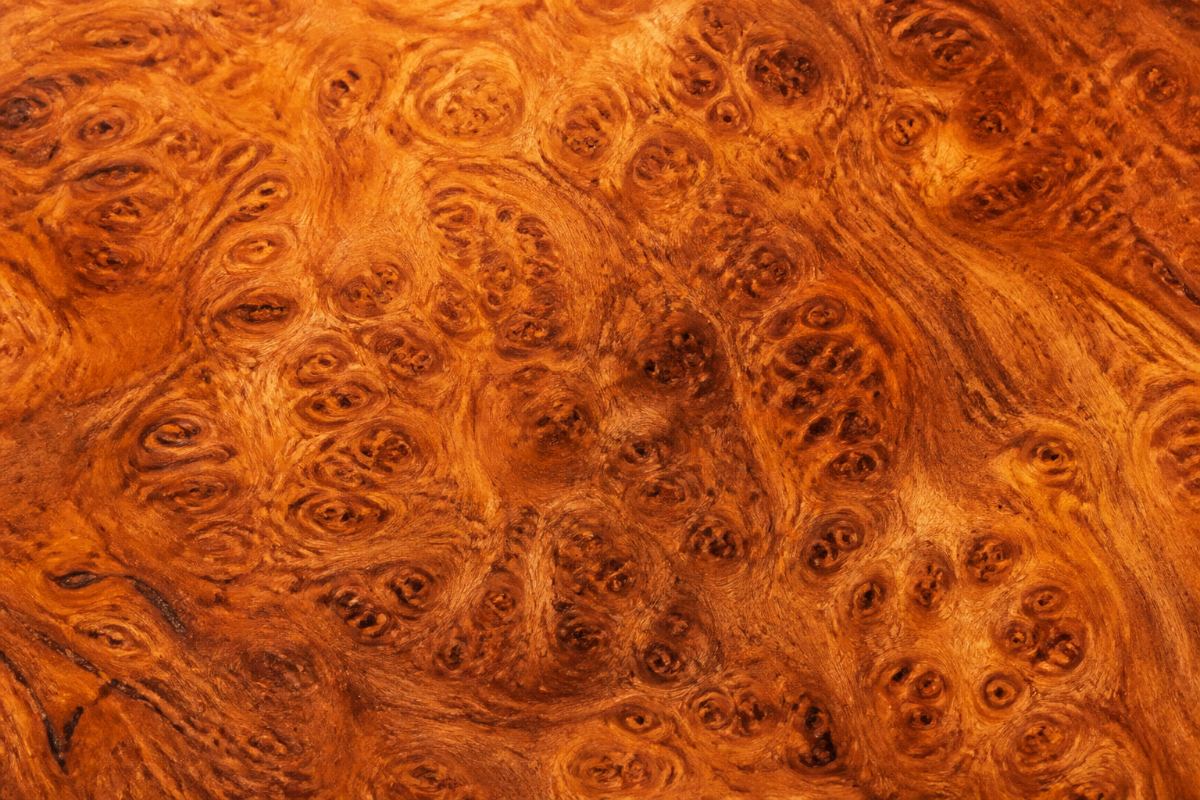
What “Moroccan thuya wood” usually means
Moroccan thuya wood comes from Tetraclinis articulata (Arabic عرعار), a conifer of Morocco’s Atlantic belt and High Atlas. Gift-grade pieces are almost always cut from root burl — the dense underground swell — not plain trunk timber.
Buyers searching this term want swirling burl figure and a cedar-like scent. A generic “wood from Morocco” stamp does not tell you the species or the cut.
Thuya is not cedar. The smell can overlap when the wood is worked; the grain, density, and botanical identity do not.
How to recognise real burl
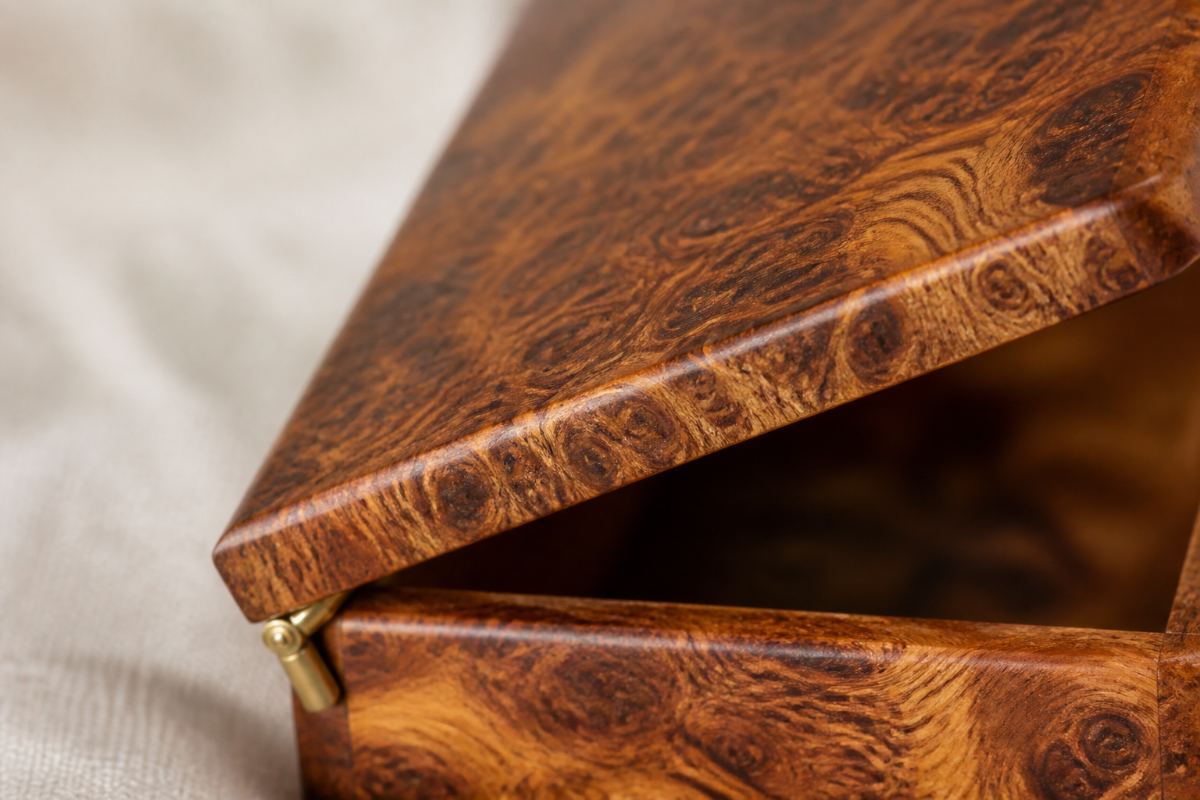
Look for continuous swirl across a face and through the thickness at an edge. Veneer can look good face-on but stops short at corners and a lid lip.
Weight and sound help: solid burl feels dense; a light, hollow tap often means a thin face over a cheap core. Tilt the piece in raking light — depth in the figure is harder to fake than a photographed swirl.
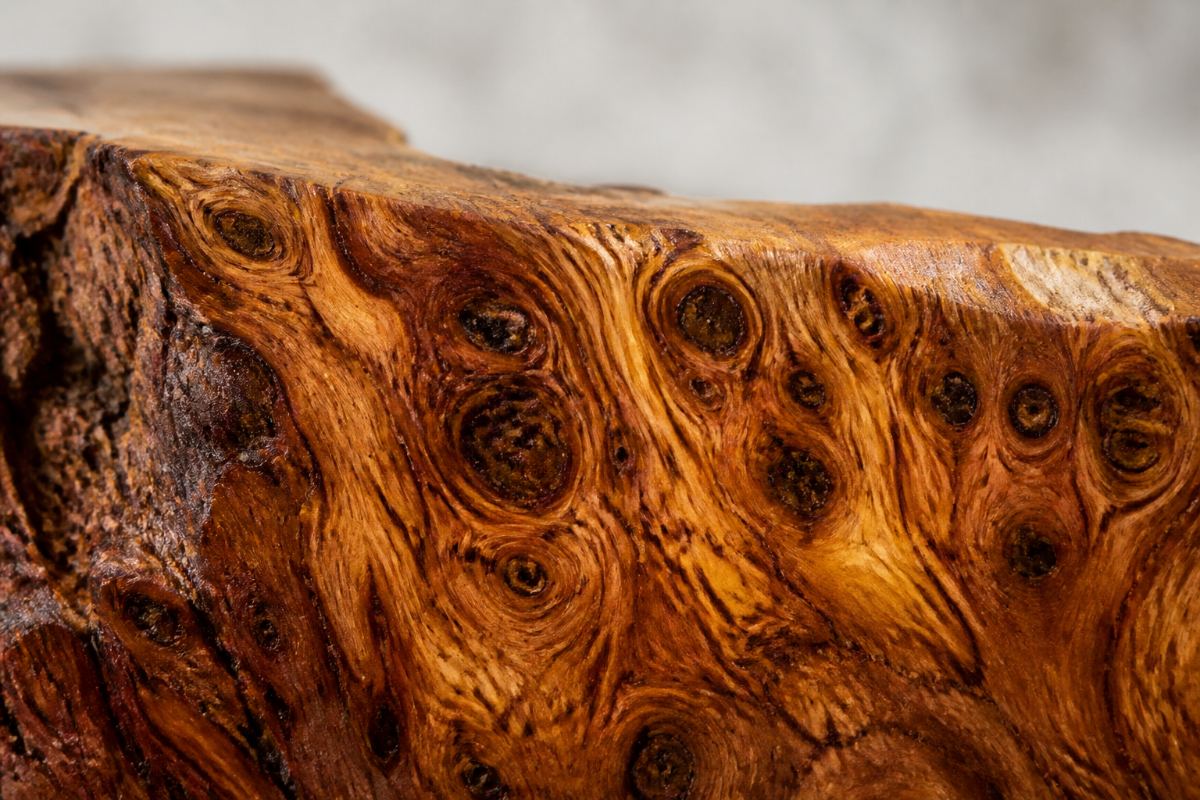
Root burl, trunk, or veneer
Root burl is scarce and regulated; that is why solid gift objects cost more. Trunk stock is straighter and less figured. Veneer stretches one good face across many lids — fine when disclosed, a problem when sold as solid.
Ask for a photograph of an edge and a corner, not only the show face. A sandwich line or an abrupt figure stop is veneer.
Where the wood comes from
Tetraclinis articulata is native mainly to Morocco, with smaller stands elsewhere in the western Mediterranean. Commercial figure comes from the root burl, not from sawn boards of the trunk.
Harvest and export rules change; cheap lots that skip origin and construction details are usually not solid root burl. Price that ignores scarcity is a warning, not a bargain.
Quick buying checklist
Species (thuya, not a cedar substitute); root burl vs trunk; solid vs veneer at the edge; wax or oil finish rather than plastic gloss; a price that can exist in a regulated, scarce wood. Hinges and linings belong to the thuya wood box guide, not this material test.
Common questions
Is cheap “Moroccan thuya” usually real burl?
No. Bargain pieces are often trunk wood, another species, or a thin burl veneer on a cheap core. Solid root burl costs more because the wood is scarce and regulated.
Is thuya the same as cedar?
No. Thuya is Tetraclinis articulata — a different conifer. It can smell cedar-like when cut, but the species and grain are not interchangeable.
Can I trust the label “solid thuya”?
Only after you check the edge. Continuous swirl through the lid rim and wall corner beats any stamp. Labels without edge photos are marketing.