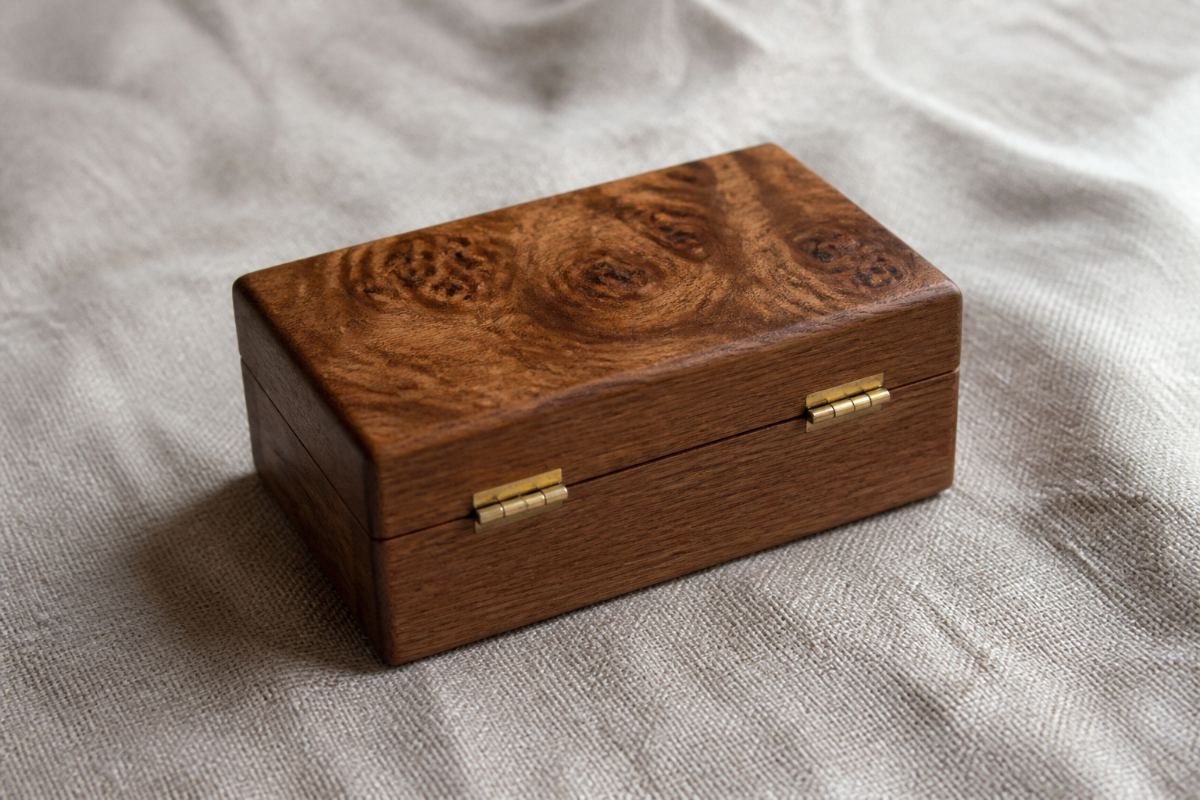
What a thuya wood box is for
A thuya wood box is a small hinged gift piece — desk or vanity scale — meant to sit in the hand. Typical width is one to two palms. Trays without lids are a different product; this guide is only hinged boxes.
The species and the burl-versus-veneer test belong in the Moroccan thuya wood guide. Here the question is whether the object works as a box: opening, cavity, hardware, lining.
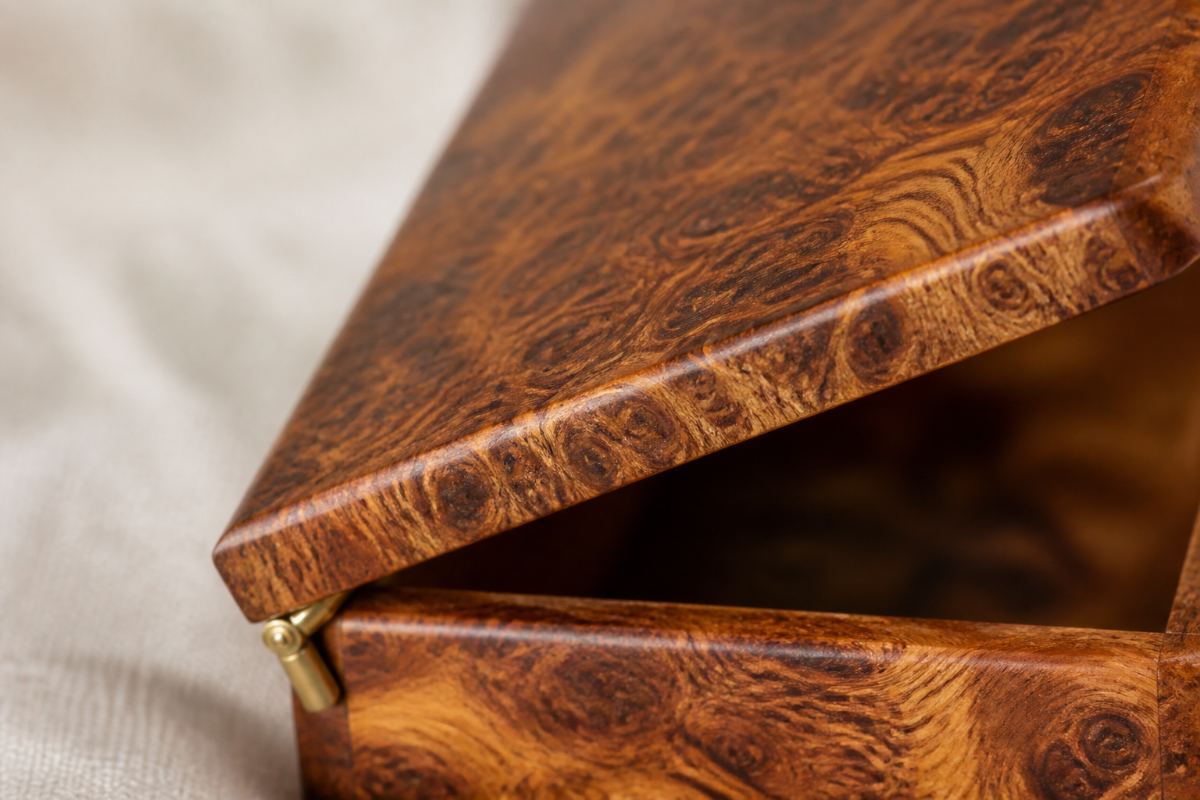
Lid edge on a box (not the tree)
Open the lid and check the rim: continuous figure into the edge usually means solid or thick burl. A thin decorative skin over pine or MDF fails that test at the lip, not in a lifestyle photo.
Very low prices almost never mean solid root throughout. Mid-range workshop pieces price in joinery and finishing as well as the face.
Hardware and lining
Hinges should sit flush and open without twisting the lid. Gaps that widen on one side often mean rushed fitting. Brass is common; painted steel that flakes is a fit and finish issue.
Linings are optional: bare wood, cedar scent, felt, or velvet. Match lining to use. An unlined interior can still be solid — judge the walls, not only the cloth.
Size and the cavity
Measure the opening if you store a watch, rings, or cards. A pretty lid does not fix a useless cavity. Desk boxes and vanity boxes are the usual shapes; oversized “chests” are another category.
If the listing never shows the interior, assume you are buying the face only.
Buying checks for the object
Even hinge gaps; lid that closes square; interior photos; honest “solid / veneer” language; a size that matches what you will put inside. Smell on opening can support the wood story — it does not replace the edge test.
Common questions
Is every thuya wood box solid burl?
No. Many gift boxes use a burl veneer face over plywood or a plain wood body. The lid edge and an interior corner show which you have.
Why do two boxes with similar size differ so much in price?
Solid root burl, hand-cut joinery, brass hinges, and a lined interior cost more than veneer on a machine-made shell. Size alone does not explain a ten-fold gap.
Should the inside of a thuya box be raw wood?
Not necessarily. Many good boxes are lined with felt or fabric to protect jewelry and hide a plain interior. An unlined interior can still be solid — check the walls, not only the lining.